

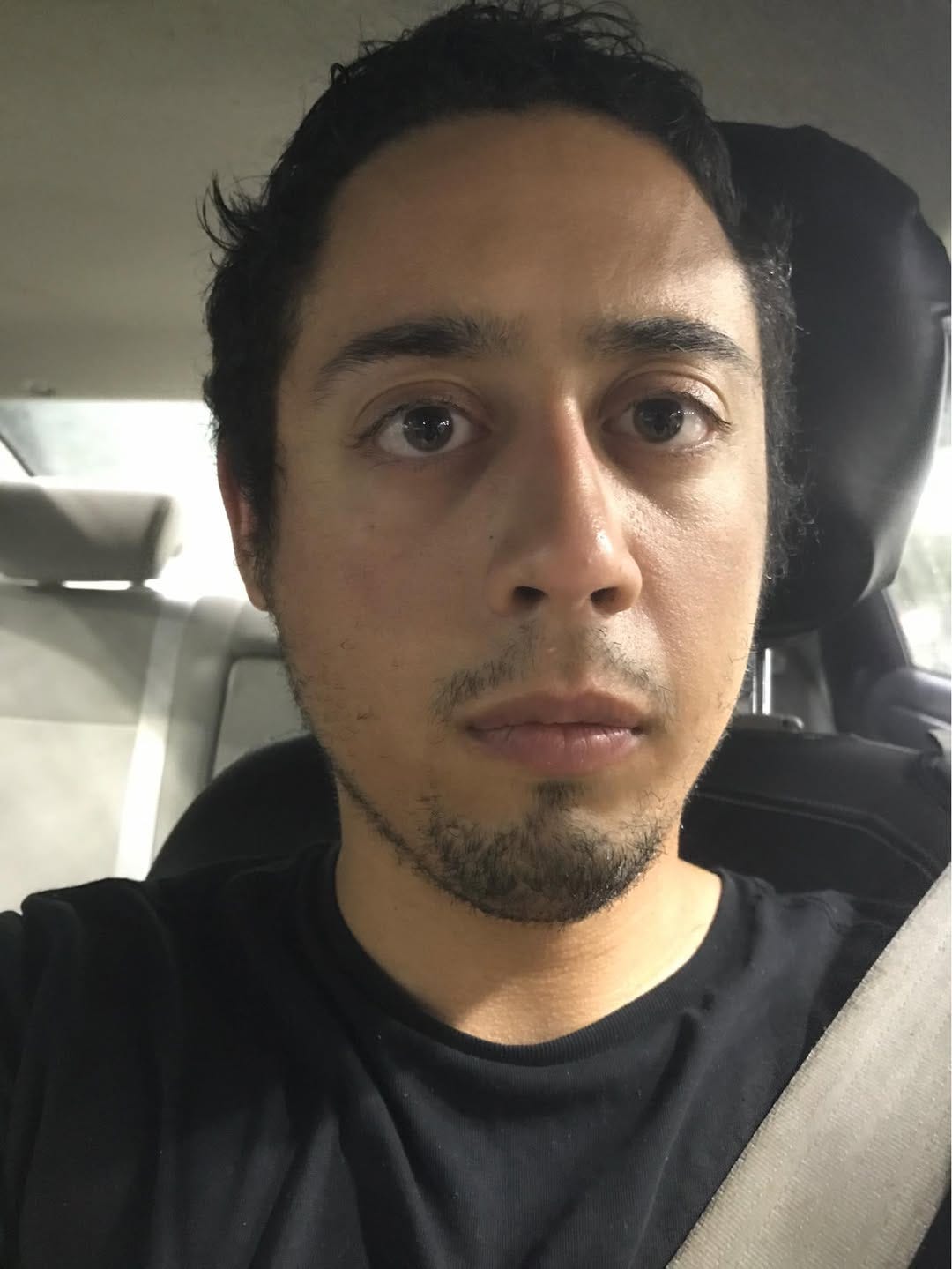
I wasn’t “struggling.”
I wasn’t “lost.”
I wasn’t “rebellious” or “undisciplined.”
I was sick. Not with a cold or a flu — but with a chronic mental illness that went untreated for thirteen years.
It didn’t hit me until today that my schizoaffective disorder wasn’t diagnosed until I was 30, after my suicide attempt.
But the truth is harsher:
My illness didn’t start at 30.
It started when I was 17.
And I lived more than half my life without the medication I desperately needed.
You might ask:
“But Barnaby, you were diagnosed with Bipolar Type 1. What do you mean you were misdiagnosed? Weren’t you taking medication?”
Yes, I was taking medication —but the wrong medication.
I was on lithium and Seroquel for years, but none of it stopped the inner monologue that wasn’t mine.
None of it stopped the delusions.
None of it stopped the ideations.
None of it stopped the psychosis.
Because here’s the part no one knew:
My first ‘voice’ came when I was 8 years old.
It told me to end my life.
It told me no one cared about me.
It repeated the same message over and over again.
And nobody saw it for what it really was.
People look at my life from 2013 to 2017 and call it a comeback.
I had lost over a hundred pounds.
I was working in tech.
I was building outbound processes, winning awards, getting recognition, and pushing myself harder than ever.
I was social, confident, sharp, and driven.
From the outside, it looked like stability.
From the outside, it looked like strength.
From the outside, it looked like I was finally “pulling it together.”
But here’s the truth I didn’t know at the time:
It was a miracle I was holding everything together at all.
I wasn’t healed.
I wasn’t stable.
I wasn’t healthy.
I was high-functioning — a version of myself who could perform at a peak level while something much darker was happening underneath.
Looking back with honest eyes, it becomes clear:
I was still hearing things.
I was still dissociating.
I was still having intrusive thoughts.
I was still fighting ideations every few weeks.
I was still living with an untreated psychotic disorder.
But I had no framework to understand it.
And because I looked successful, nobody questioned it — not friends, not coworkers, not doctors, not even me.
That is the real miracle:
That I was able to build, perform, excel, and create while the foundations of my inner world were unstable.
Any clinician looking at my history now would say the same thing:
Your level of functioning during an untreated schizoaffective disorder is rare.
But back then, I didn’t know that.
I thought the highs were “momentum.”
I thought the clarity was “discipline.”
I thought the rapid thinking and bursts of productivity were “grinding hard.”
I didn’t realize I was running on borrowed brain chemistry —
that I was outrunning an illness I didn’t know I had.
And yet… somehow… I was still standing.
Somehow, I was still achieving.
Somehow, I was still making it through each day.
Somehow, I was still alive.
When I say “miracle,” I mean it literally:
I survived a decade of untreated schizoaffective disorder while building a life that looked stable from the outside.
Most people in my condition would’ve collapsed long before that.
Some do.
Some never return.
The fact that I’m here — writing, reflecting, healing — is something I don’t take lightly anymore.
Now everything makes sense.
It makes sense that I broke down at 17 after Haiti — trauma that cracked something inside me before I had the language to describe it.
It makes sense that the psychosis started creeping in quietly and consistently.
It makes sense that I was banned and kicked out of Liberty University during a manic episode that nobody recognized for what it was.
It makes sense that my jobs were inconsistent for a decade — that I’d rise fast and burn out even faster — because I was literally fighting a brain disorder with no treatment.
It all makes fucking sense now.
I wasn’t unstable because I was irresponsible.
I wasn’t inconsistent because I lacked discipline.
I wasn’t chaotic because I was immature.
I was sick.
And nobody caught it.
Not the doctors.
Not the counselors.
Not the pastors.
Not even me.
Do you know how relieving that is?
To finally see the pattern?
To finally connect the dots?
To finally understand that it wasn’t weakness — it was an untreated illness pushing me to the edge for over a decade?
But the relief is mixed with something else, too: frustration.
Because it shouldn’t have taken a suicide attempt for someone to say, finally,
“This isn’t bipolar — this is schizoaffective disorder.”
And yes — part of that was on me.
I didn’t tell the whole truth in the hospitals.
I didn’t admit the voices.
I didn’t talk about the delusions.
I didn’t want anyone to think I was “crazy,” so I filtered everything.
But what was I supposed to do?
I was 17, then 20, then 25 — ashamed, confused, terrified, and desperately trying to hold it all together.
I hid the worst parts of the illness because I thought hiding it was the only way to survive.
And hiding it almost killed me.
I’ve been on Invega since I was 30.
Now I’m 34. That’s four years of quiet.
Four years without the internal monologue that wasn’t mine.
Four years without the delusions running in the background of my mind.
Four years without the ideations circling me like vultures every other week.
Four years of stability — the kind I didn’t even know was possible.
For the first time in my life, my brain stopped fighting itself.
People talk about medication like it’s some kind of crutch or weakness.
But in my case, medication is the thing that finally gave me a fair fight.
Before Invega:
My thoughts were stacked on top of each other
I couldn’t separate what was “me” from what was the illness
The voices were constant companions
Ideations came in waves
Stress pushed me into dangerous mental territory
Sleep was unpredictable
My mind was a room with too many radios playing at once
After Invega?
It was like someone walked into the room, turned off all the radios, and opened the windows.
For the first time, I could hear myself.
Not the disorder.
Not the intrusive thoughts.
Not the chaos.
Just me.
People don’t realize how radical that is unless they’ve lived through it.
I used to think the way my mind operated was “normal for me.”
That the racing thoughts were just my personality.
That the impulses were just my weaknesses.
That the ideations were just part of my story.
I didn’t know my brain could feel like this:
Quiet, steady, grounded, whole.
Invega didn’t change who I am.
It revealed who I actually was underneath the noise.
And these last four years — the writing, the growth, the clarity, the resilience, the calm — none of that was possible without finally being on the right medication.
That’s the miracle.
Not the diagnosis.
Not the survival.
The miracle is that the proper treatment finally found me — even if it took thirty years.
If you’re reading this and your life hasn’t made sense for a long time —
If your emotions don’t match your actions,
If your thoughts run in directions you never chose,
If your breakdowns feel random,
If your spiritual life feels like a war zone,
if people keep telling you it’s “discipline” or “motivation” or “sin” or “laziness” or “lack of prayer” or “personal weakness”…
I want to tell you something I wish someone had told me fifteen years ago:
You might not be broken.
You might be sick.
And that is not your fault.
Misdiagnosis steals years.
It steals stability.
It steals identity.
It steals relationships.
It steals clarity.
It steals time you will never get back.
But it does not rob you of your ability to heal once the truth finally finds you.
If you’ve been misdiagnosed:
You’re not alone
You’re not crazy
You’re not failing
You’re not weak
You’re not hopeless
You’re surviving an illness without the tools you needed.
And that makes you stronger than you realize.
Don’t let shame silence you.
Don’t let fear convince you that honesty will ruin everything.
Tell the truth — to yourself, to someone you trust, to a doctor, to anyone who can help you get the right treatment.
You deserve the correct diagnosis.
You deserve the right medication.
You deserve a brain that doesn’t turn against you.
You deserve peace.
If you resonate with anything in my story, even a fraction of it, please take this seriously:
Get help.
Tell the whole truth.
Don’t wait for a crisis to be heard.
You don’t have to collapse the way I did.
You don’t need a suicide attempt to get answers.
You don’t have to live in dark rooms you never chose.
There is a path forward.
And it’s not found in pretending to be strong.
It’s found in being honest about your weakness.
A Closing Message of Hope, Realism, and Faith
I’m not going to pretend everything is perfect now.
I still have bad days.
I still have intrusive thoughts when I’m tired.
I still have to be mindful of my mind.
I still carry scars — emotional, spiritual, and physical.
But I’m here.
I’m alive.
I’m thinking clearly.
I’m stable in a way I didn’t know humanly possible.
I’m walking toward the life I was meant to have.
And in all of it — the pain, the breaks, the survival —
I see something I didn’t see before:
God never left me.
He never abandoned me.
He never stopped holding the part of me I couldn’t keep myself.
Not in Haiti.
Not at Liberty.
Not during the panic and paranoia.
Not in the 2019 hospital.
Not on the bathroom floor the night I tried to end everything.
I used to think God only lived in the churches I couldn’t stay in.
But he lived in the margins.
He lived in the breakdowns.
He lived in the quiet moments after I survived things I didn’t think I could.
He lived in the medication that saved my life.
He lived in the clarity that arrived after thirty years of confusion.
He lived in the fact that I didn’t die when, statistically, I should have.
My faith isn’t naïve anymore.
It’s not tied to performance, Sunday-morning formulas, or pretending I’m fine.
It’s tied to survival.
It’s tied to truth.
It’s tied to mercy that keeps chasing me, even when I don’t chase it back.
And if you’re reading this —
I want you to know that the same mercy is still chasing you, too.