

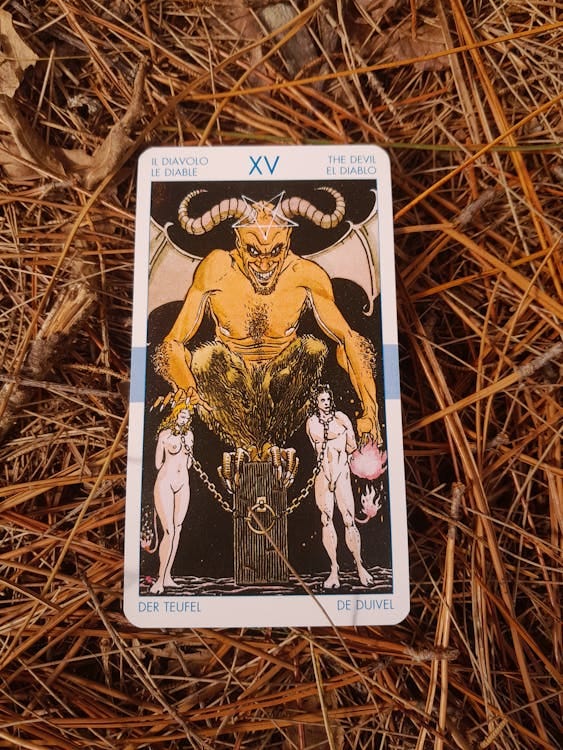
I don’t believe in the devil, the enemy, demons, or Satan in the way they’re commonly talked about.
I grew up around that language, and I still attend Cornerstone Christian Center. There’s a lot I respect there, especially the focus on community, feeding the poor, and loving your neighbor.
But I don’t agree with the theology around the devil.
So I started thinking it through.
Let’s assume, for the sake of argument, that the devil is real.
Where is he? Is he in Hell? Is he roaming the Earth?
If we go with the idea that he’s active in the world, then what does that actually mean?
What kind of authority does he have? What kind of power does he have over people?
Is he:
omnipresent?
sovereign?
able to access our thoughts?
actively influencing billions of people at the same time?
Because that’s where the logic starts to break down.
For example, I recently heard the idea that “the devil tries to divide marriages.”
That raises a serious question.
If that’s true, then how is that happening at scale?
Is one being influencing millions of relationships simultaneously? That would require a level of presence and control that sounds a lot like omnipresence, which traditionally belongs to God alone.
Even in the Bible, the picture isn’t that simple.
In Job, “the satan” appears more like an accuser or prosecutor within a divine framework, not an independent ruler of evil.
In Revelation, the devil is not ruling Hell but is ultimately judged and cast into it.
So the idea of a sovereign, all-present being actively managing human behavior doesn’t seem consistent, even within the text itself.
At that point, it makes more sense to ask a different question:
What if the language of “the devil” is actually describing something else?
What if it’s a way of talking about patterns that show up in human behavior and relationships?
Things like:
resentment
temptation
ego
poor communication
destructive habits
These don’t require a supernatural being to explain them. They’re part of human psychology and social dynamics.
And when we label those patterns as “the devil,” it can sometimes shift responsibility away from our own choices and behaviors.
To be clear, I’m not rejecting everything about the faith or the community I’m part of.
I don’t find the common explanations about the devil to be logically consistent or necessary to explain what we actually see in the world.